



Reus / News / Salou
The Duna Gran Forest and Pla del Maset: A New Natural Route in Salou
Costa Dorada. 14 June 2026.
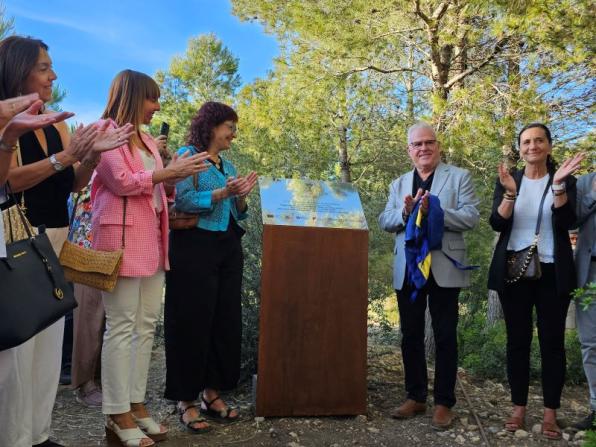
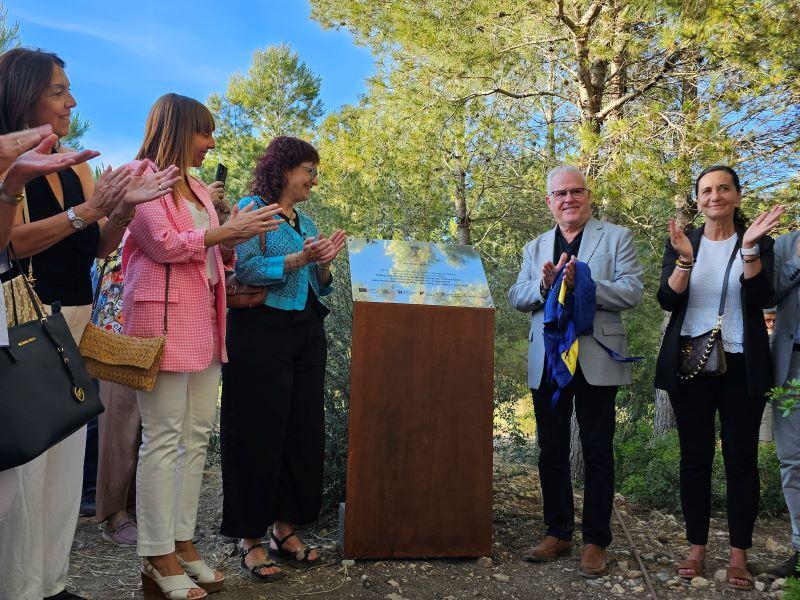
During the opening ceremony, the Mayor of Salou, Pere Granados, highlighted the importance of recovering elements of the municipality's agricultural past, noting that "for years, our administration has focused on recovering and protecting our heritage, making it accessible to everyone".
He added that "to love Salou is to know its history and pass it on to future generations". He emphasized that the restoration of the Duna Gran Forest and Pla del Maset "strengthens our sense of belonging and is a source of pride for Salou, as it combines heritage recovery with innovation to improve everyone's quality of life and well-being".
The opening ceremony was attended by several Salou city councilors, directors of the territorial services for the Departments of Agriculture and Tourism of the Generalitat in Tarragona, and the councilor of Prades, among other local authorities and representatives of Salou's community organizations.
Salou has added a new area to the municipality's network of natural spaces: the Duna Gran Forest and the Pla del Maset. Located in Cap Salou, this is a wooded area where nature and landscape blend with traditional agricultural heritage, allowing Salou to reclaim a part of its history.
The significance of the forest lies in the fact that it grows on a large sandy system, formed by sand blown inland from nearby beaches over time, which has been stabilized and preserved thanks to the vegetation. Today, it offers an almost untouched, authentic landscape featuring flora and fauna typical of this ecosystem—such as the sand dune steppe—alongside a diverse range of birds, squirrels, rabbits, and the brown lizard, which is a protected species.
AGRICULTURAL SALOU
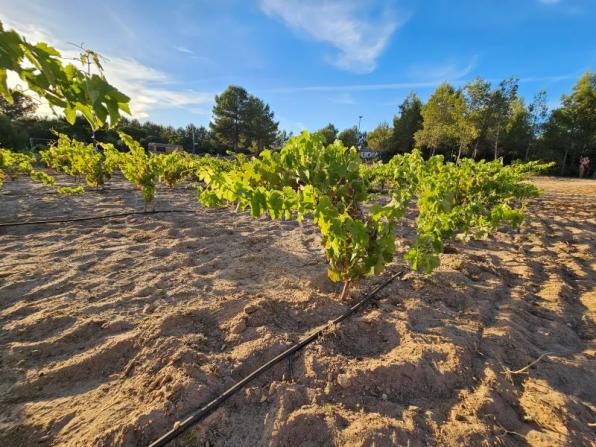
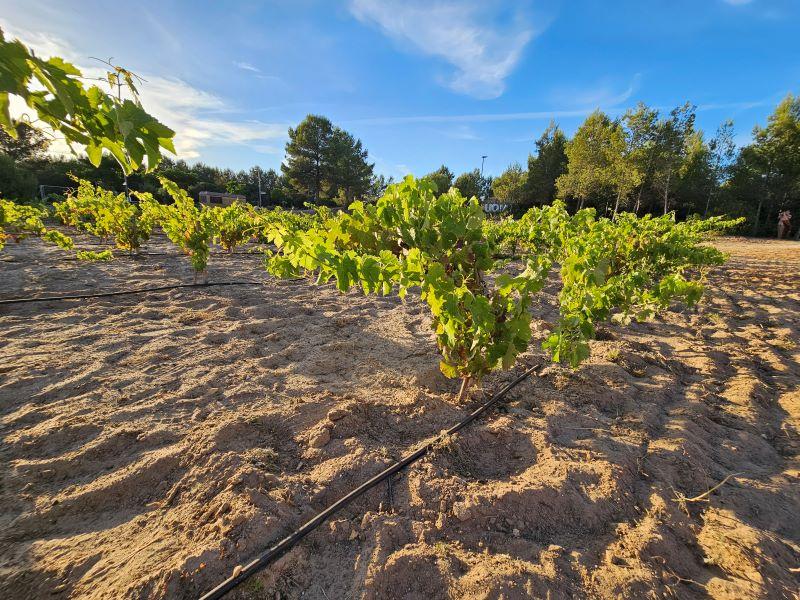
Historically, the surrounding area consisted entirely of farmland. Consequently, at the Pla del Maset estate, traditional viticulture has been revived with the planting of 1,000 vines of the "Pàmpol Girat" variety and another 1,000 of the "Escanyagos" variety. This experimental project is being carried out in collaboration with the Rovira i Virgili University (URV) and the Catalan Institute of Vine and Wine (INCAVI) of the Generalitat de Catalunya. The goal is to research how these traditional varieties adapt to sandy soils like those of El Pla, particularly in light of the impacts of climate change on agriculture.
Notably, the "Pàmpol Girat" variety —a traditional red grape from the Camp de Tarragona region— was once considered extinct. However, it was recovered thanks to a sample sent in 1975 by the Reus Oenological Station to the El Encín estate in Alcalá de Henares, which houses one of the most important grape variety collections in Europe.
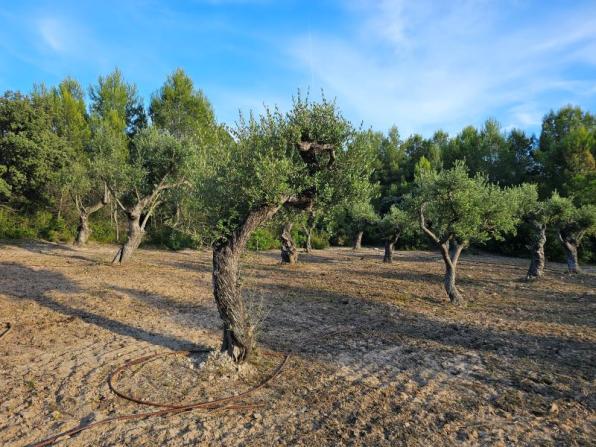
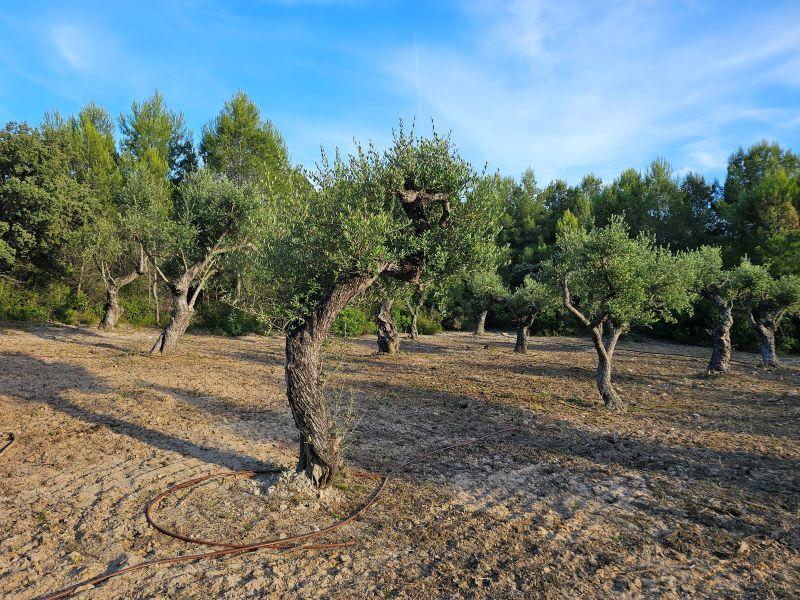
Alongside the vineyards, centuries-old olive trees from old estates in Salou have also been planted. The olives harvested from these trees are used by the City Council to produce a charity olive oil for local social organizations.
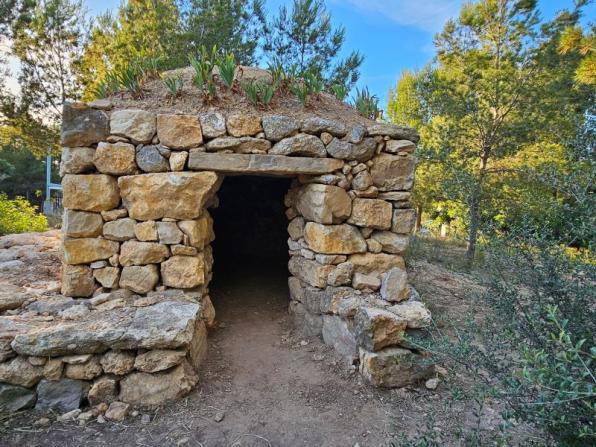
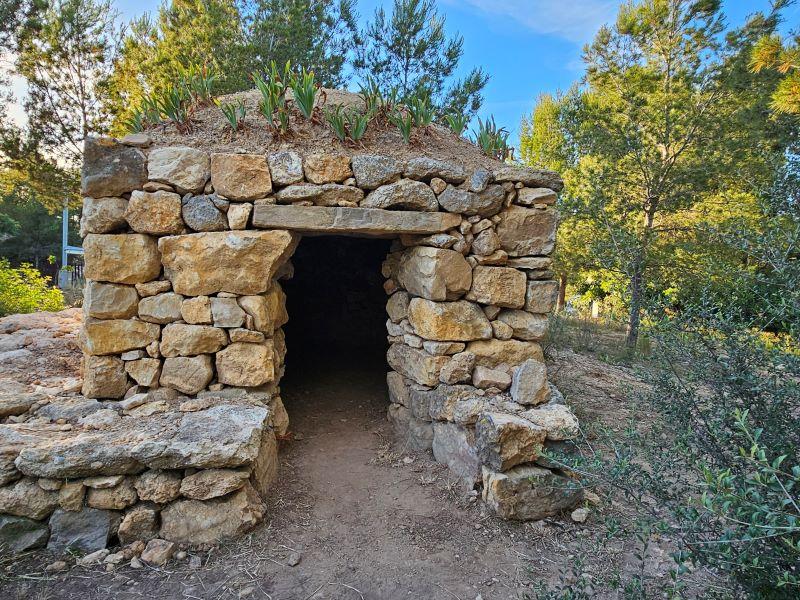
Beyond the crops, the restoration efforts include the "barraca del Flixet", a traditional dry-stone shelter historically used by farmers to store tools and seek shelter. Several original dry-stone walls have been preserved, while others have been rebuilt. Visitors can also see the ruins of the original "maset" (country house) that gives the estate its name.
THE ROUTE DISCOVERY
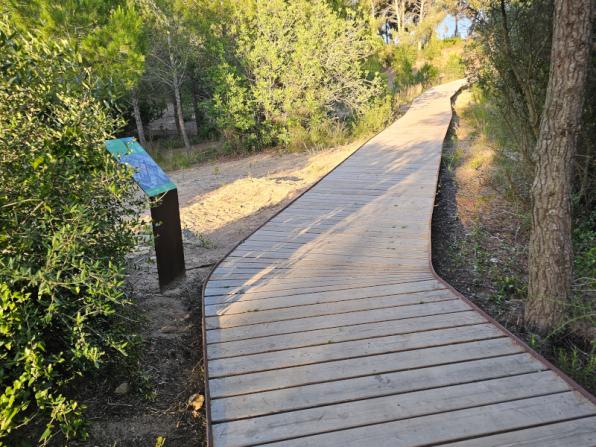
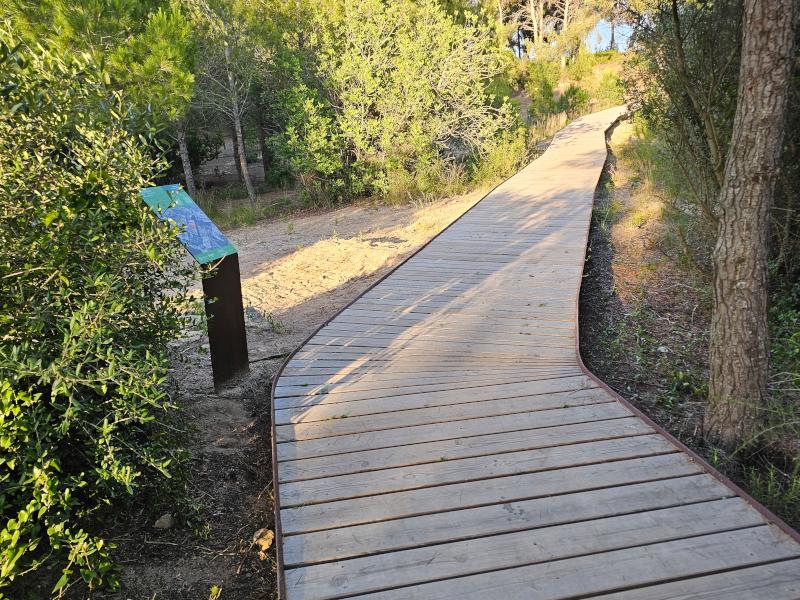
To allow visitors to explore and enjoy this natural and ethnographic heritage, Salou City Council has set up two signposted routes featuring QR codes that provide information about the area's rich biodiversity. Wooden walkways have also been installed to ensure accessibility for everyone, including individuals with reduced mobility.
The two routes are as follows:
The significance of the forest lies in the fact that it grows on a large sandy system, formed by sand blown inland from nearby beaches over time, which has been stabilized and preserved thanks to the vegetation. Today, it offers an almost untouched, authentic landscape featuring flora and fauna typical of this ecosystem—such as the sand dune steppe—alongside a diverse range of birds, squirrels, rabbits, and the brown lizard, which is a protected species.
AGRICULTURAL SALOU
Historically, the surrounding area consisted entirely of farmland. Consequently, at the Pla del Maset estate, traditional viticulture has been revived with the planting of 1,000 vines of the "Pàmpol Girat" variety and another 1,000 of the "Escanyagos" variety. This experimental project is being carried out in collaboration with the Rovira i Virgili University (URV) and the Catalan Institute of Vine and Wine (INCAVI) of the Generalitat de Catalunya. The goal is to research how these traditional varieties adapt to sandy soils like those of El Pla, particularly in light of the impacts of climate change on agriculture.
Notably, the "Pàmpol Girat" variety —a traditional red grape from the Camp de Tarragona region— was once considered extinct. However, it was recovered thanks to a sample sent in 1975 by the Reus Oenological Station to the El Encín estate in Alcalá de Henares, which houses one of the most important grape variety collections in Europe.
Alongside the vineyards, centuries-old olive trees from old estates in Salou have also been planted. The olives harvested from these trees are used by the City Council to produce a charity olive oil for local social organizations.
Beyond the crops, the restoration efforts include the "barraca del Flixet", a traditional dry-stone shelter historically used by farmers to store tools and seek shelter. Several original dry-stone walls have been preserved, while others have been rebuilt. Visitors can also see the ruins of the original "maset" (country house) that gives the estate its name.
THE ROUTE DISCOVERY
To allow visitors to explore and enjoy this natural and ethnographic heritage, Salou City Council has set up two signposted routes featuring QR codes that provide information about the area's rich biodiversity. Wooden walkways have also been installed to ensure accessibility for everyone, including individuals with reduced mobility.
The two routes are as follows:
- "Sorral del Bosc Gran": A 500-meter itinerary that runs entirely along the wooden walkways. It offers an easy, accessible path, allowing visitors to safely enjoy the natural and heritage surroundings.
- "Vinya del Flixet": A circular 1,000-meter route that loops through the Duna Gran Forest environment. It highlights the area's ecological diversity, restored heritage features, and the signature landscape of Cap Salou.
During the opening ceremony, the Mayor of Salou, Pere Granados, highlighted the importance of recovering elements of the municipality's agricultural past, noting that "for years, our administration has focused on recovering and protecting our heritage, making it accessible to everyone".
He added that "to love Salou is to know its history and pass it on to future generations". He emphasized that the restoration of the Duna Gran Forest and Pla del Maset "strengthens our sense of belonging and is a source of pride for Salou, as it combines heritage recovery with innovation to improve everyone's quality of life and well-being".
The opening ceremony was attended by several Salou city councilors, directors of the territorial services for the Departments of Agriculture and Tourism of the Generalitat in Tarragona, and the councilor of Prades, among other local authorities and representatives of Salou's community organizations.
REQUEST MORE INFORMATION BY EMAIL




Booking hotels